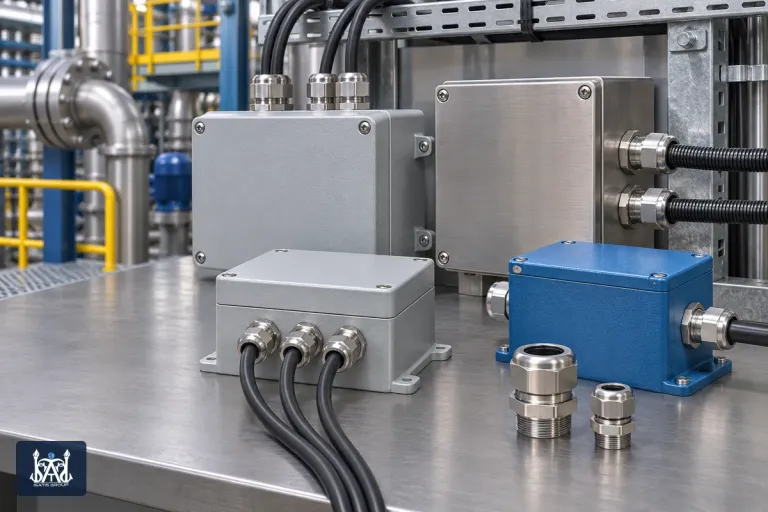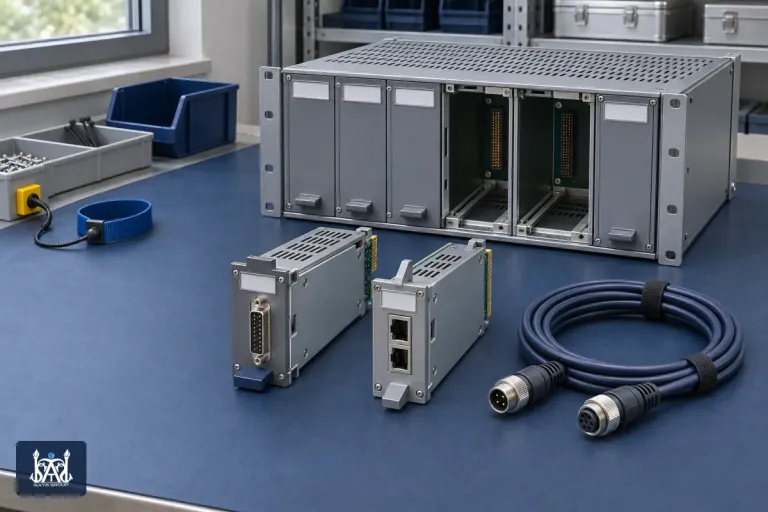
Check the usable depth inside an enclosure after the rail, device and plugged-in connector are fitted. A 200 mm exterior depth can conceal a door clash.
A cabinet's outside dimensions include more than the space available for components. The mounting plate, rails, door equipment, wiring and bends all use part of the depth.
Use a section through the tightest point
Start at the mounting surface and work toward the inside of the closed door. Include the highest connector or duct opposite any door-mounted device. Check manufacturer clearances for the equipment being installed.
A nominally 200 mm deep box
A device less than 200 mm deep may still interfere with the door after the plate, rail and plugged-in connector are added. Draw both the rear and door-mounted items on the same section.
Enquiry checklist
| Item | What to record |
|---|---|
| Enclosure | External and usable dimensions. |
| Mounting | Plate offset and rail height. |
| Door | Rear projection of door devices and wiring envelope. |
Check the quotation Add a second view from inside the closed cabinet. Mark the space taken up by connectors, wiring or rear accessories so the footprint on the front panel is only one of the dimensions compared.
Ask for an internal dimensional drawing. If there are different mounting plate positions, record the one used to determine usable depth.
Sample enquiry to ISATIS
Please quote an enclosure for the attached section. State the usable depth with the mounting plate fitted and door closed.