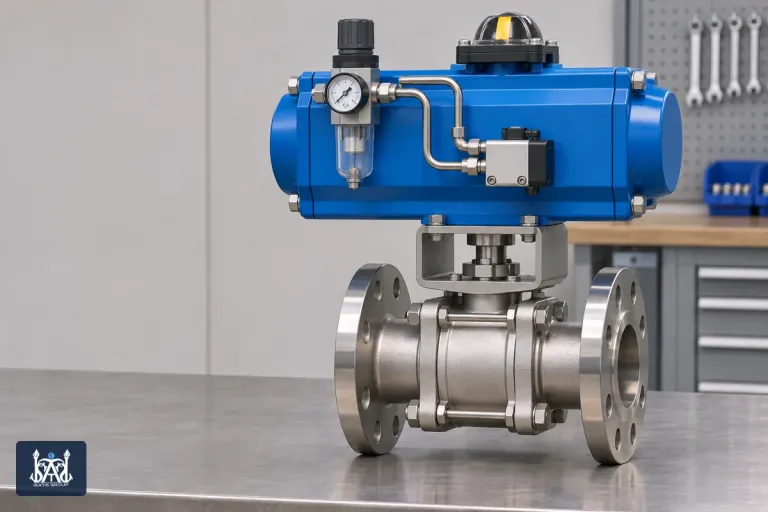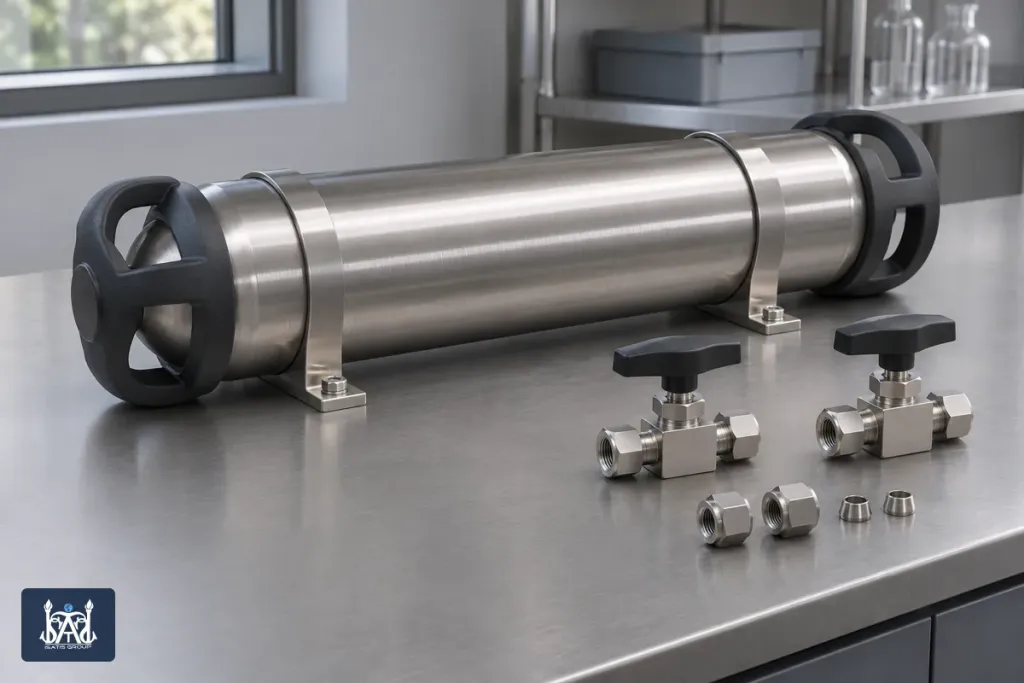
Specify an instrumentation fitting for 6 mm or ¼ in tubing. Check tube outside diameter, the opposite connection and the exact scope before ordering.
A quarter inch is 6.35 mm. Rounding that to 6 mm on a tube-fitting request can change the connection ordered.
Describe each end independently
One end may grip the tube outside diameter while the other has a pipe thread. Give the size and connection type at each end. For the actual service, tubing material, wall thickness and the pressure and temperature limits of the assembly also need review.
A request that says only “quarter-inch adaptor”
It leaves the buyer guessing which end is tubing, what thread form is required and whether both ends are the same size. Mark A and B on the drawing. Identify the installed fitting family from a traceable part or document.
Enquiry checklist
| Item | What to record |
|---|---|
| Tube end | Actual outside diameter in its original unit. |
| Other end | Tube diameter or thread form and gender. |
| Accessories | Family-specific nut and ferrules where required. |
Check the quotation Put a reference point at each end of the dimension you give. If a catalogue length is measured between different faces, ask for a marked drawing before comparing the numbers.
Do not infer interchangeability between compression-fitting components by appearance. Use a documented assembly reference or ask for explicit confirmation of complete compatibility.
Sample enquiry to ISATIS
Please quote the two ends in their original units as shown. Identify the assembled order code and included nut and ferrules; distinguish the tube end from the pipe-thread end.