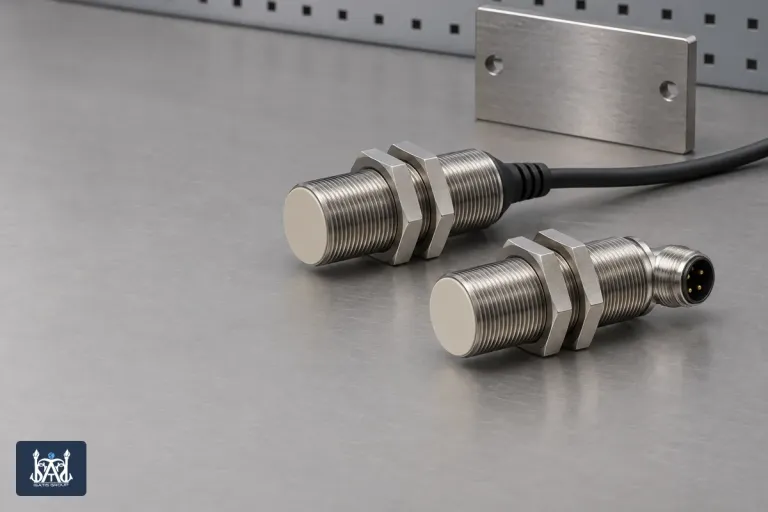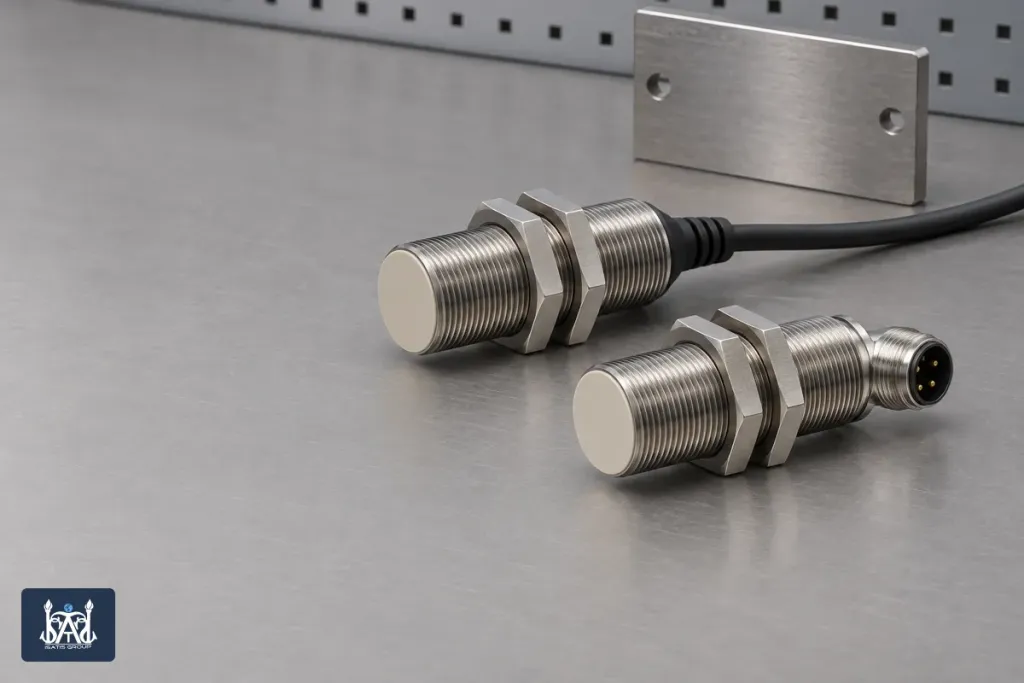
Is the part opposite the conveyor sensor a passive reflector or a wired receiver? Identify the sensing arrangement before ordering a photoelectric replacement.
A retroreflective sensor uses a reflector. An opposed-beam pair uses a separate emitter and receiver, while a diffuse sensor detects light returned by the object. Identify the existing arrangement before ordering accessories.
Look at both sides of the detection point
Record the sensor code, opposite component, working distance and object. Clear containers and shiny surfaces may require selection features that are not apparent from a generic reflector description.
A reflector request for a through-beam station
The component across the conveyor may be an electrically connected receiver. Replacing it with a passive reflector changes the sensing arrangement. A photograph of both sides can resolve the ambiguity.
Enquiry checklist
| Item | What to record |
|---|---|
| Sensor | Model and sensing mode. |
| Opposite side | Reflector, receiver or no separate component. |
| Object | Material, surface and size at the detection point. |
Check the quotation Show the supply, output and mating accessory as separate entries. Ask whether the offer includes the connector, reflector, head or mounting piece actually used on the installed device.
Ask for the reflector or receiver code approved for the proposed sensor and distance. Include mounting and alignment accessories if required.
Sample enquiry to ISATIS
Please identify the opposite component from the attached station photos and quote the compatible item for the stated object and distance.