A 100 mV/g accelerometer gives a 200 mV signal component at 2 g in the ideal case. Check the monitor input and mounting response as well as sensitivity.
A vibration sensor has to suit the monitor's input and the way it attaches to the machine. Sensitivity describes the signal produced per unit acceleration, while mounting and frequency response affect the measurement itself.
Read the sensor and monitor specifications together
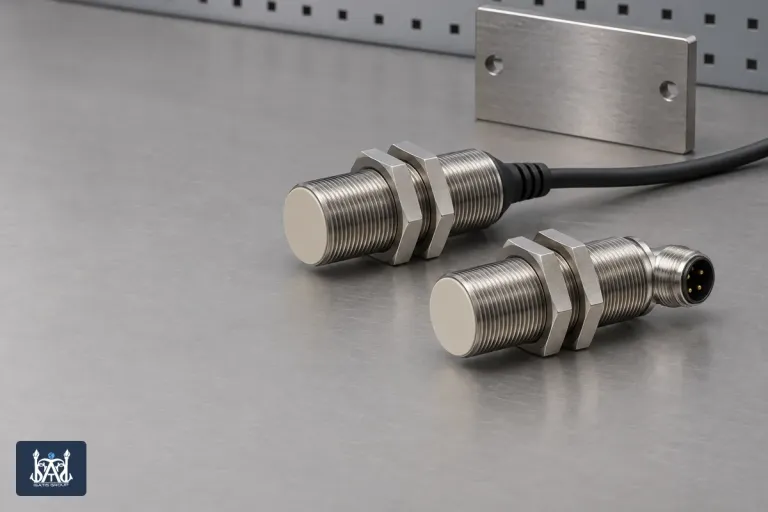
Collect sensitivity with units, excitation requirements, frequency range, connector and mounting detail. A change to cable exit direction or mounting thread can make a nominally equivalent spare difficult to fit.
What does 100 mV/g mean?
For an idealised sensor rated 100 mV/g, an acceleration of 2 g corresponds to a 200 mV signal component. This illustrates sensitivity. The monitor still needs a compatible input and sufficient range for the expected vibration.
Enquiry checklist
| Item | What to record |
|---|---|
| Sensor | Sensitivity, unit and expected acceleration. |
| Monitor | Input type and excitation. |
| Mount | Thread, orientation and connector clearance. |
Check the quotation In addition to the sensor, identify the receiver that interprets its signal. Ask for the output and scaling of the proposed replacement in the units that receiver expects.
Compare like measurement conventions when interpreting amplitudes. Ask for the response specification under the proposed mounting conditions.
Sample enquiry to ISATIS
Please quote an accelerometer for the attached monitor input and mounting point. State sensitivity, usable frequency range, connector and mounting thread.